You Should Smile Less

All I really wanted was a healthy baby.
But when I found out my second baby was a girl, I was over-the-moon happy. A euphoria rushed over me despite everything I knew about gender construction. I couldn’t help feeling like the luckiest mama on the planet.
Immediately after taking in the news, I tamped it down by reminding myself that her anatomy would not define her gender. She would define her gender.
But, a girl… *sigh*
At the time, my son’s favorite movie was Mary Poppins (the old school one). His favorite part was “Step In Time.” Sometimes I’d skip ahead to that part, but not before Glynis Johns (the mother) burst into the house singing “Sister Suffragette” and I’d sing along (until my kid shushed me).
This line chokes me up every time:
“Our daughters’ daughters will adore us, and they’ll sing in grateful chorus, ‘Well done, Sister Suffragette!’”
There is something about having a daughter—looking back at my matriarchal line, knowing the spirit of my mother and grandmother and great-grandmother lives on in her—that feels… I don’t know… powerful and resilient.
I didn’t want a daughter so I could dress her like a little doll and parade her around. I wasn’t excited to decorate her room in various shades of pink. I hate princess culture. And I knew that she wasn’t going to be a receptacle for all my hopes and dreams. (I have years of therapy to thank for this!)
So, why did it matter to me?
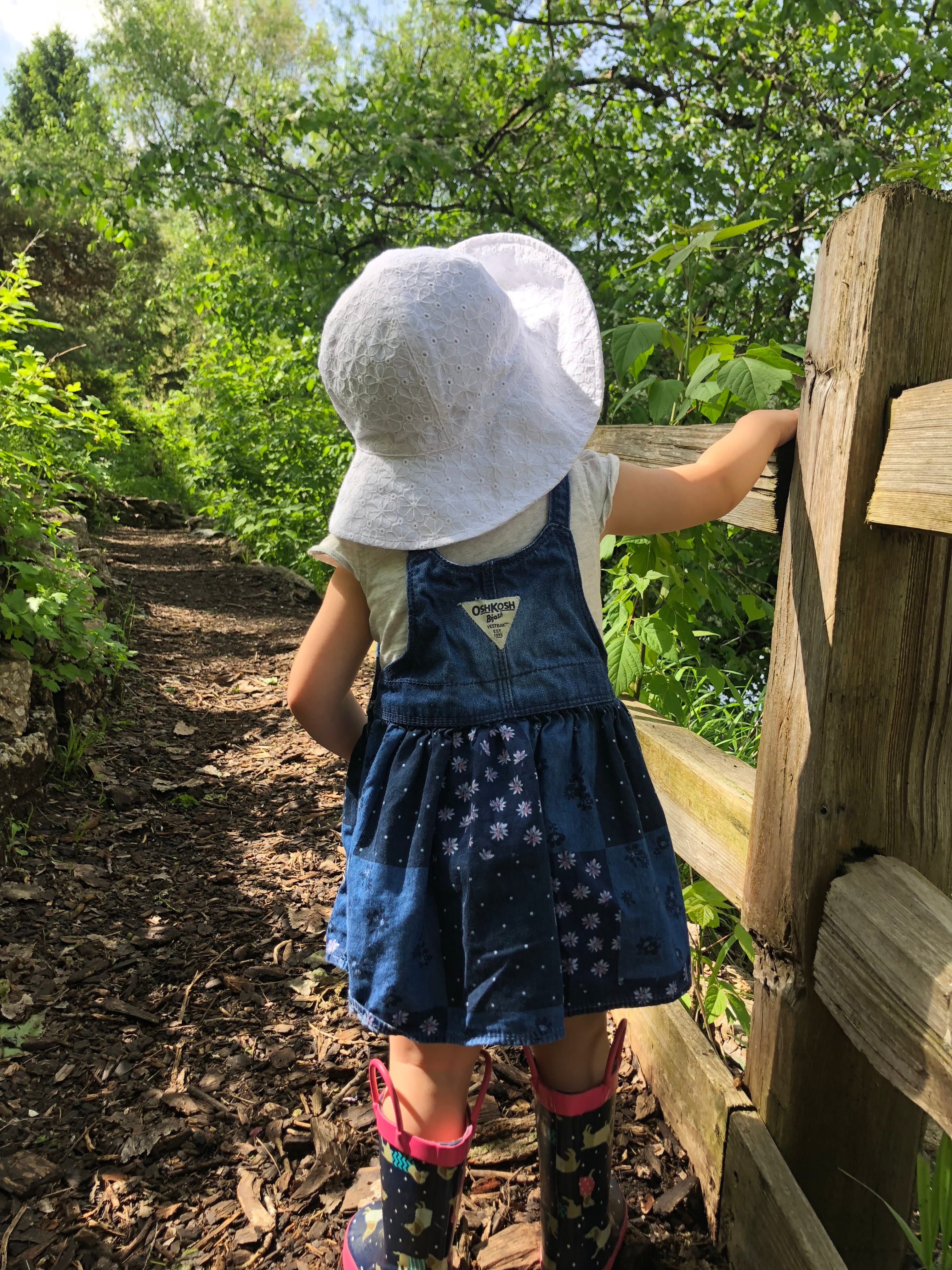
When you strip away all the girly things, all that’s left is her anatomy—and I think this is exactly it—her anatomy dictates how the world sees her and treats her. And I know all about it.

Here is what I learned about being a girl in the first half of my life:
There is power in pretty.
Presentation is everything.
How to smile my way out of a sticky situation.
Here is what I didn’t learn (or more precisely, what I didn’t have a strong grasp of by the time I was sent out into the world):
How to fight back.
How to stand my sacred ground.
How to speak up for myself.
In the summer between high school and college, I attended orientation weekend at my new school: UCLA. Although I was born in the city, I grew up in the suburbs in a town where I knew all my neighbors, and the streetlights were a signal that it was time to head home. I was super excited for the adventure of a big school in a big city. So cosmopolitan!
One evening after attending tours and panels and standing in line to get my picture taken for my spankin’ new school ID card, I walked down to Westwood Village to look around. I wandered into a collegiate shop and bought my mom a shirt that said, “UCLA Mom.” Feeling giddy with my purchase, I started to head back to the dorms. After half a block, I got this feeling—a tingle between my shoulder blades. Someone was following me.
When I turned to look over my shoulder, I could see a man creeping toward me with a limp. I stopped at a crosswalk and waited for the signal to go. My body went rigid, and I fixed my gaze straight ahead. Still very much a kid, I was wedged between two important precepts: obey the law and be polite.
Even though I heard him approaching, the crack of his voice shook me.
“Hey, little lady! Can you…”
“NO!” I shouted and sprinted across the street. It was the first time I can recall telling a man no. It was a boots-on-the-ground education.

As a kid of the 80s & 90s I learned “stranger danger.” My mom instructed me to fight like hell if anyone ever grabbed me and tried to shove me into a van. And when I was a teen, she warned me against parking on “Lover’s Lane” where serial killers prey on unsuspecting couples.
What I didn’t get was nuance—the crisp understanding that predators can be strangers and family, people you encounter out in the world and at holiday gatherings.
I’ve been trying to shake the “nice-girl” programming for decades. I learned how to look cute and be sweet. I grew up giving obligatory hugs and cheek pecks to sweaty old men. (I even knew to wipe the sweat from my face in secret so I wouldn’t offend them.)
I was told: You must be taking those pretty pills and You should smile more.
I learned to smile and say thank you.
I think I was excited to have a daughter so I could give her everything my mom gave me AND MORE. I want to raise a lightning rod, the force of a thousand war cries, generations of phoenix rising, all in a single tender body. For me, raising a daughter means filling in the gaps and front-loading as much badass, fight-like-hell energy I can before she has her boots-on-the-ground moment. Because of course she will.
A few years ago, I jump-started this programming by feeding her the answers to the following questions:
Is it your job to be pretty? No.
What’s your job? To be kind.
Except for? Creepy old men.
What do we say to creepy old men? Fuck off, creepy old man!
(We’re working on it!)
Maybe this is all framed by my own experience living in this body. Maybe having a daughter means I’m reparenting myself a little, giving myself the permission I need to say, “Fuck off, creepy old man!” Because jeezus, all that people-pleasing took me right into an ill-fitting, dysfunctional, and abusive straight marriage, it took me a decade to get out of.
So far, I think I’m doing okay raising a tiny badass, but I’m not sure. Although ask my partner, and they’ll tell you my daughter is a fierce self-advocate. That feels like success. Maybe the true spirit of my mother and grandmother and great-grandmother living inside of her is the ability to figure it out, boots-on-the-ground. Maybe that’s how we survive in the big, wide world in these bodies we were born into.
Maybe someday, my daughter will look back at her matriarchal line and say, “Well done, Sister Suffragette!”
Shoulder to shoulder, into the fray, I’ll answer back:
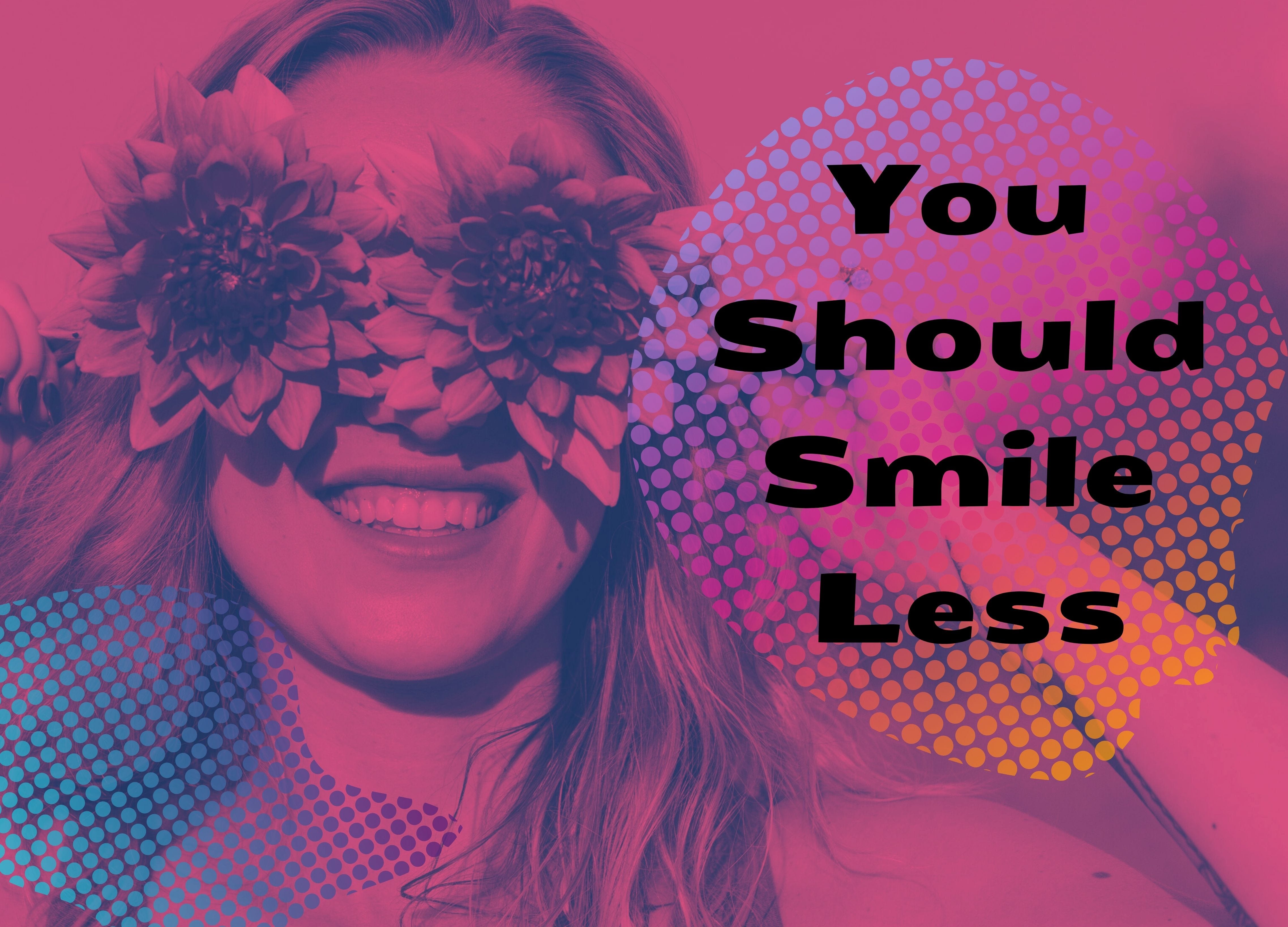
You should smile less.
I created mock-ups of a sticker I’m thinking of making.
Horn Hand
Grumpy Flower